


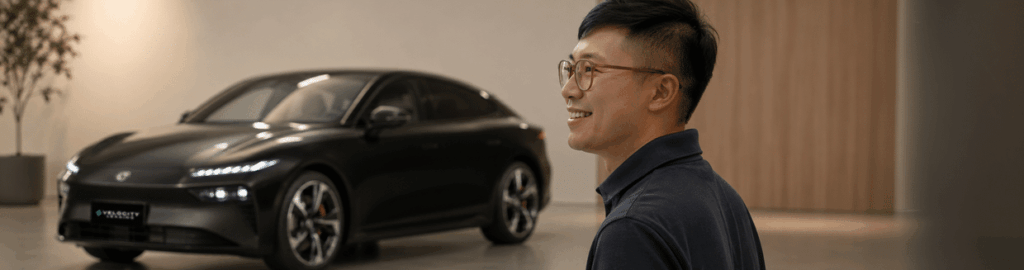

Driver profile: Zaac leased a Dongfeng 007 EV with Velocity Leasing after previously driving petrol and hybrid vehicles including the Honda Shuttle and Nissan Serena. In this review, he shares why petrol costs, charging access, boot space, and predictable leasing costs influenced his switch.
The Difference Between Driving a Petrol Car and an EV
For many drivers in Singapore, switching from a petrol car to an electric vehicle is a big decision. It is not just about driving a newer car or trying the latest technology. It is about cost, convenience, charging access, vehicle practicality, and whether the car rental or leasing arrangement fits your lifestyle.
For Zaac, the decision to move from petrol car ownership to EV leasing came after years of consideration.
He had already been interested in electric vehicles five to six years ago. However, at that time, Singapore’s EV charging infrastructure was still developing, and there were no convenient EV chargers near his HDB estate.
“Back then, there wasn’t any EV charger at my HDB area,” he shared.
Today, the situation is different. Singapore’s EV charging network has expanded significantly, with 30,500 charging points deployed as of March 2026 and a national target of 60,000 charging points by 2030, including 40,000 in public car parks and 20,000 in private premises. Electric car rental and EV leasing have become more practical options for everyday drivers in Singapore.
“Almost every HDB, shopping mall, and commercial building you go to has at least four to six chargers or more. The charging infrastructure in Singapore is getting more mature as the years go by.”
After driving petrol and hybrid cars such as the Honda Shuttle and Nissan Serena, he noticed an immediate difference when moving to an EV.
“The drivetrain is a little bit different,” he said. “I kind of like that pick-up. Moving off from the traffic light, you’d be the first.”
For drivers who spend a lot of time on Singapore roads, especially in city traffic, this smoother and quicker acceleration can make daily driving feel more responsive. Unlike a petrol car, an electric vehicle delivers power almost instantly, which is one reason many drivers enjoy the EV driving experience.
This is one of the biggest differences drivers often notice when they move from a petrol car to an electric vehicle.
Rising Petrol Costs Made Him Rethink Car Ownership
Before switching to an EV, petrol expenses were becoming harder to manage.
His Nissan Serena had a 52-litre tank, and a full tank could cost around $150. Over time, the cost became significant enough that he started limiting himself to pumping only $100 worth of petrol.
“It came to a point that I had to limit my driving frequency to ration my petrol,” he said.
For drivers who use their cars frequently, especially private-hire drivers, part-time PHV drivers, and families who depend on a car daily, petrol cost can become a major monthly expense.
That was when he began to seriously compare the cost of owning a petrol car against EV leasing and car rental options in Singapore.
Boot Space Was a Must-Have
While lower running costs were important, practicality mattered just as much.
Having previously driven vehicles like the Honda Shuttle and Nissan Serena, he was used to having generous boot space. For his lifestyle, a large boot was not a bonus. It was a requirement.
“A car without a large boot space is a deal breaker for me,” he explained.
That became one of the key reasons he chose the Dongfeng 007. It gave him the electric driving experience he wanted while still offering the boot space he needed for daily use.
For anyone comparing car rental or leasing options, this is an important reminder: the right car is not just about price. It also needs to fit your real driving needs, whether that means boot space, passenger comfort, mileage requirements, or PHV suitability.
Why He Chose Leasing Instead of Buying
The switch was not only from petrol to electric. It was also from owning a car to leasing one.
For him, that was a major financial and lifestyle decision.
When he owned a car, he had to carry most of the ownership responsibilities himself. That included road tax, servicing, maintenance, insurance, and other unexpected costs that can come with car ownership.
With a leasing arrangement, those concerns became easier to manage.
“Moving from owning to leasing elevates such risks from me,” he said. “I don’t have to worry about these risks. All these are covered in my lease.”
One of the biggest advantages of leasing was monthly cost clarity.
Instead of dealing with unpredictable ownership expenses, he now knows what he is paying every month. This makes budgeting simpler and gives him greater peace of mind.
For drivers comparing car rental, long-term car leasing, or buying a new EV, this predictability can be an important factor.
What About Charging Concerns?
One common concern drivers have about switching from petrol to EV is charging.
For him, the concern today is much smaller than it was several years ago. With more chargers across Singapore, charging an EV has become much more convenient.
The main situation that still requires planning is driving from Singapore into Malaysia.
“The only concern today is driving out of Singapore into Malaysia, and this is when you need to plan your driving route and charging stops,” he said.
However, he does not see this as a major issue because drivers can now search online for nearby fast chargers and plan their route in advance.
For most daily driving in Singapore, EV charging has become much more manageable than before.
Advice for Part-Time PHV Drivers Considering an EV
For part-time PHV drivers thinking about switching from a petrol car to an electric car, his advice is simple: calculate carefully.
“Calculate your numbers and cost, whether it is sustainable,” he advised. “Assess how much you’re willing to pay.”
Before making the switch, he discussed the decision with his family and team. They compared leasing an EV against purchasing a brand-new electric vehicle.
The key considerations included the large down payment required to buy a car, depreciation, running costs, and the financial risks of ownership.
In the end, leasing made the most sense for him.
For PHV drivers, this is especially important. The right PHV car rental or EV leasing plan should support your income goals, mileage needs, charging habits, and monthly budget.
Why He Chose Velocity Leasing
After deciding that EV leasing made more sense than buying, he compared different car rental and EV leasing companies in Singapore.
Velocity Leasing stood out because of its competitive pricing, especially for a brand-new EV.
“Velocity Leasing prices are reasonable and competitive,” he shared. “Not many leasing companies are willing to set such a competitive price for a brand-new car.”
For him, the appeal was not just the price. Leasing through Velocity Leasing also gave him clearer monthly costs and reduced the usual concerns that come with car ownership, such as servicing, maintenance, road tax, and insurance.
This made the switch from petrol car ownership to EV leasing feel more practical and manageable.
Is EV Leasing Right for You?
Switching from petrol to electric may feel like a big step, especially for drivers who are used to owning their cars.
For this driver, the decision became clearer once he looked at the full picture:
- Petrol costs were becoming harder to manage
- EV charging access in Singapore had improved
- The Dongfeng 007 offered the large boot space he needed
- Leasing gave him clearer monthly budgeting
- Maintenance, insurance, and road tax were covered under the lease
- Buying a new EV would require a large upfront commitment
For drivers considering car rental, PHV car rental, or long-term EV leasing in Singapore, the key is to understand your own driving needs and calculate the total cost carefully.
As EV charging infrastructure continues to improve, electric car leasing is becoming a more practical option for drivers who want lower running costs, predictable monthly payments, and a smoother driving experience.
For this driver, switching to a Dongfeng 007 through Velocity Leasing was not just about changing cars.
For drivers comparing petrol ownership, EV leasing, and car rental in Singapore, Velocity Leasing offers a practical way to switch to electric with clearer monthly costs.
Watch the video here to hear Zaac’s EV leasing experience and learn more.
Sources and references:
This article is based on a real driver’s EV leasing experience with Velocity Leasing, sharing first-hand insights on petrol costs, charging access, boot space, and the decision to lease instead of buy.
Faq
Is EV leasing suitable for PHV drivers in Singapore?
Yes, EV leasing can be suitable for PHV drivers in Singapore, especially for drivers who want clearer monthly costs and potentially lower running expenses compared with petrol cars. Before switching, PHV drivers should calculate their expected earnings, lease cost, charging cost, daily mileage, and driving schedule.
Why are PHV drivers switching from petrol cars to EV leasing?
Many PHV drivers are considering EV leasing because petrol costs can be high and unpredictable, especially for drivers who spend many hours on the road. EVs also offer a smoother driving experience, quick acceleration, and lower day-to-day charging costs depending on usage. Leasing can also reduce the financial risks of car ownership by offering more predictable monthly expenses.
Is it cheaper to lease an EV than a petrol car in Singapore?
Leasing an EV may be more cost-effective than driving a petrol car in Singapore, especially for PHV drivers or high-mileage drivers who spend many hours on the road. This is because EV charging can be cheaper than petrol, depending on your charging routine, electricity rates, and daily mileage.
Before making the switch, drivers should compare the full monthly cost, including lease payments, charging costs, petrol expenses, servicing, maintenance, insurance, road tax, and any upfront payments.
For PHV drivers, the most important question is whether the EV lease supports your income goals while keeping your monthly expenses predictable.
Are there enough EV chargers in Singapore for daily driving?
EV charging access in Singapore has improved significantly, with more chargers available at HDB carparks, shopping malls, and commercial buildings. For most daily driving within Singapore, charging is becoming easier to manage. Drivers who frequently travel to Malaysia should still plan their route and charging stops in advance.
Why choose Velocity Leasing for EV leasing in Singapore?
Velocity Leasing offers a practical way for drivers to switch from petrol to electric without taking on the full cost and risks of car ownership. For PHV drivers and everyday drivers comparing EV leasing, PHV car rental, and long-term car leasing in Singapore, Velocity Leasing provides competitive pricing, clearer monthly costs, and leasing support that can make EV driving more manageable.

